View cart, items:

A320 Flight Training Device

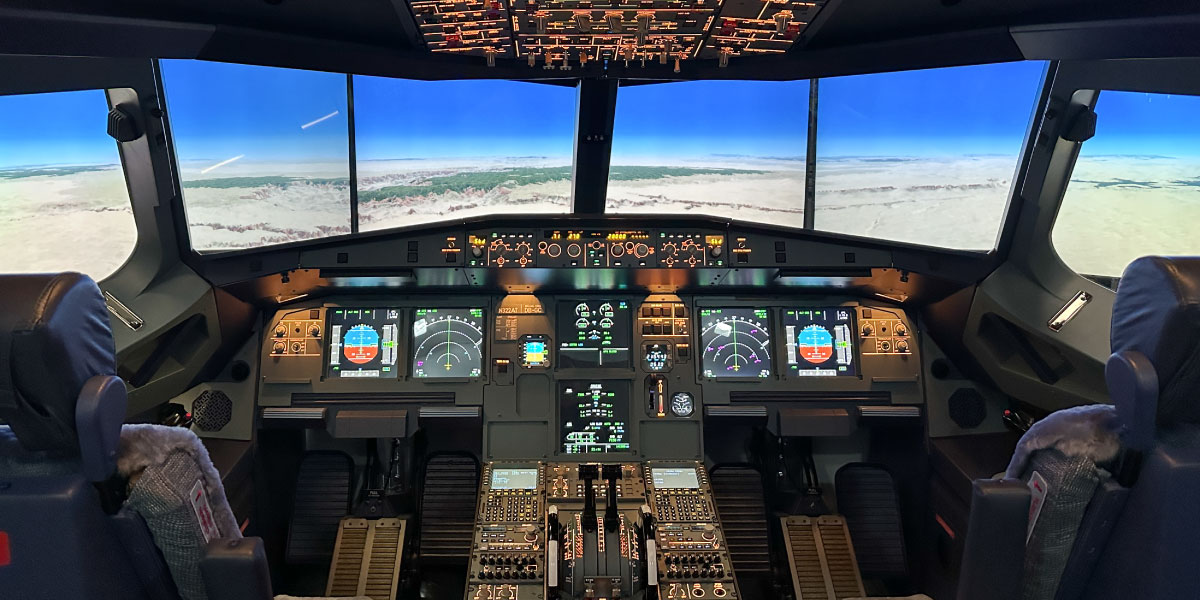
Fly-by-wire, protection laws, and dual MCDU operation in an authentic A320 flight deck. Full tactile hardware, so crews build the habits the aircraft will ask for.

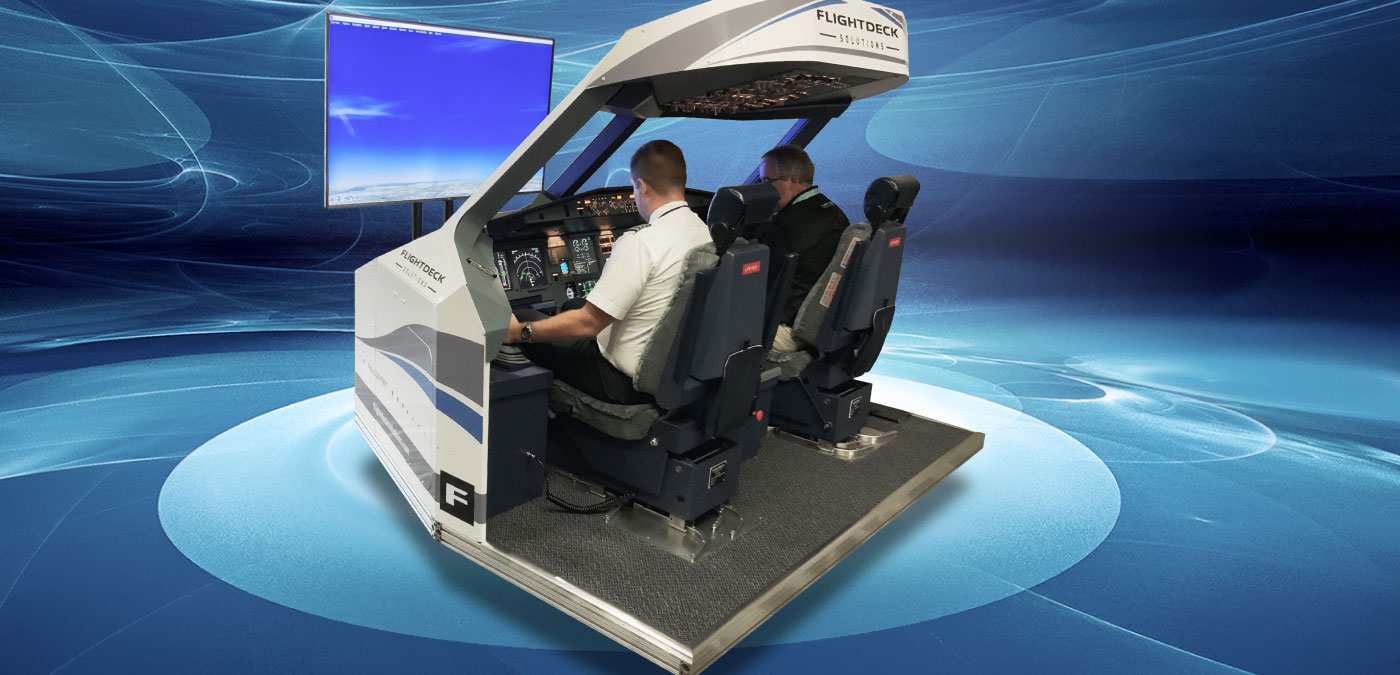
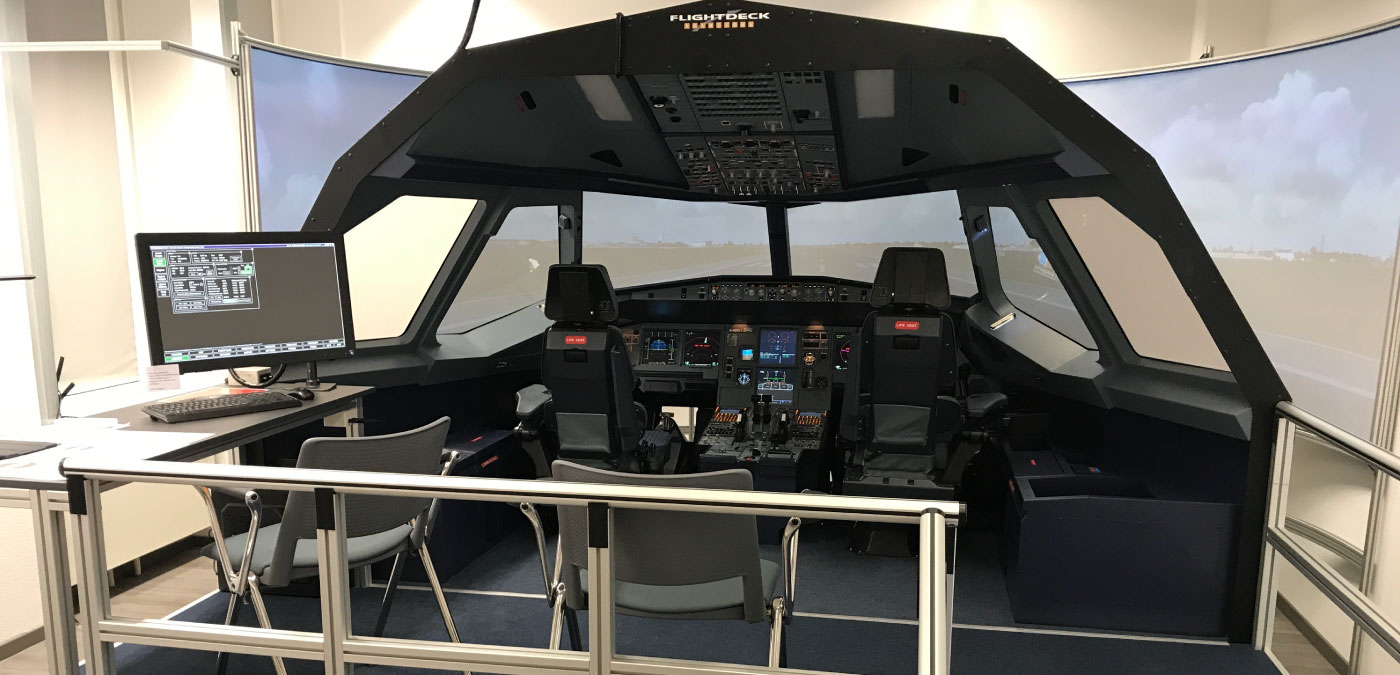
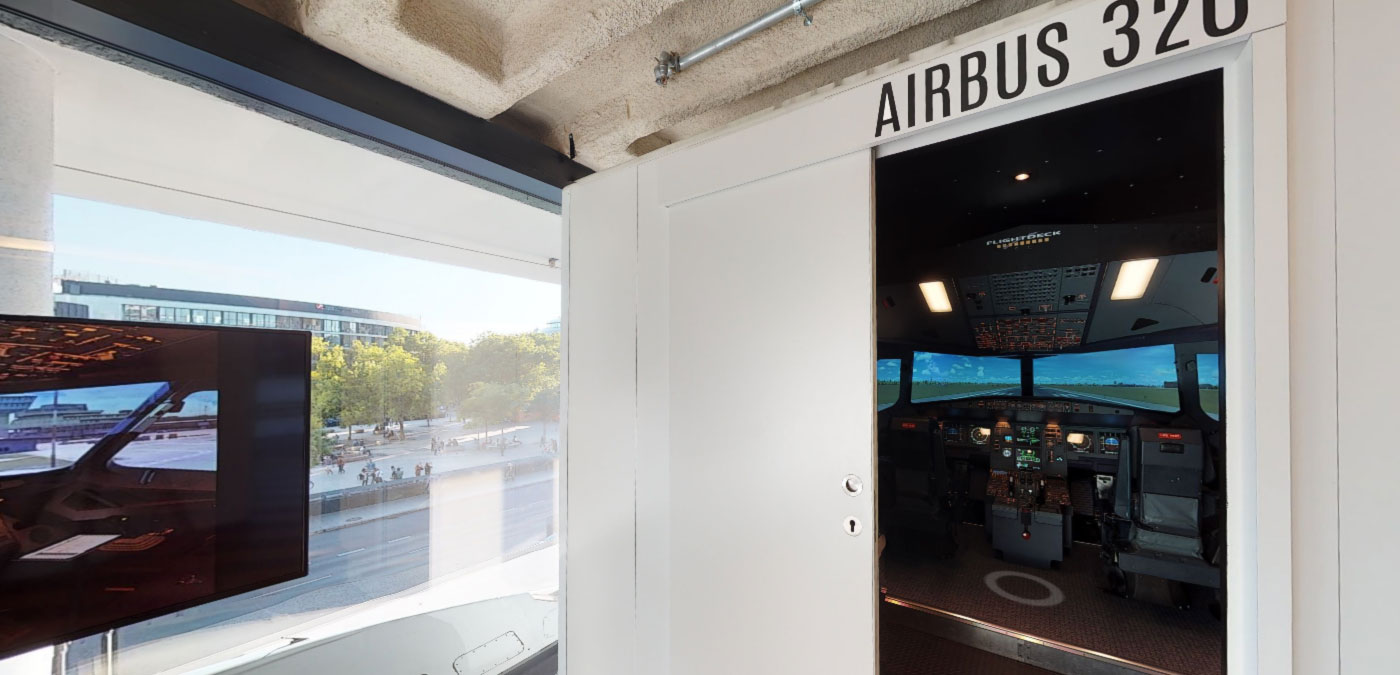
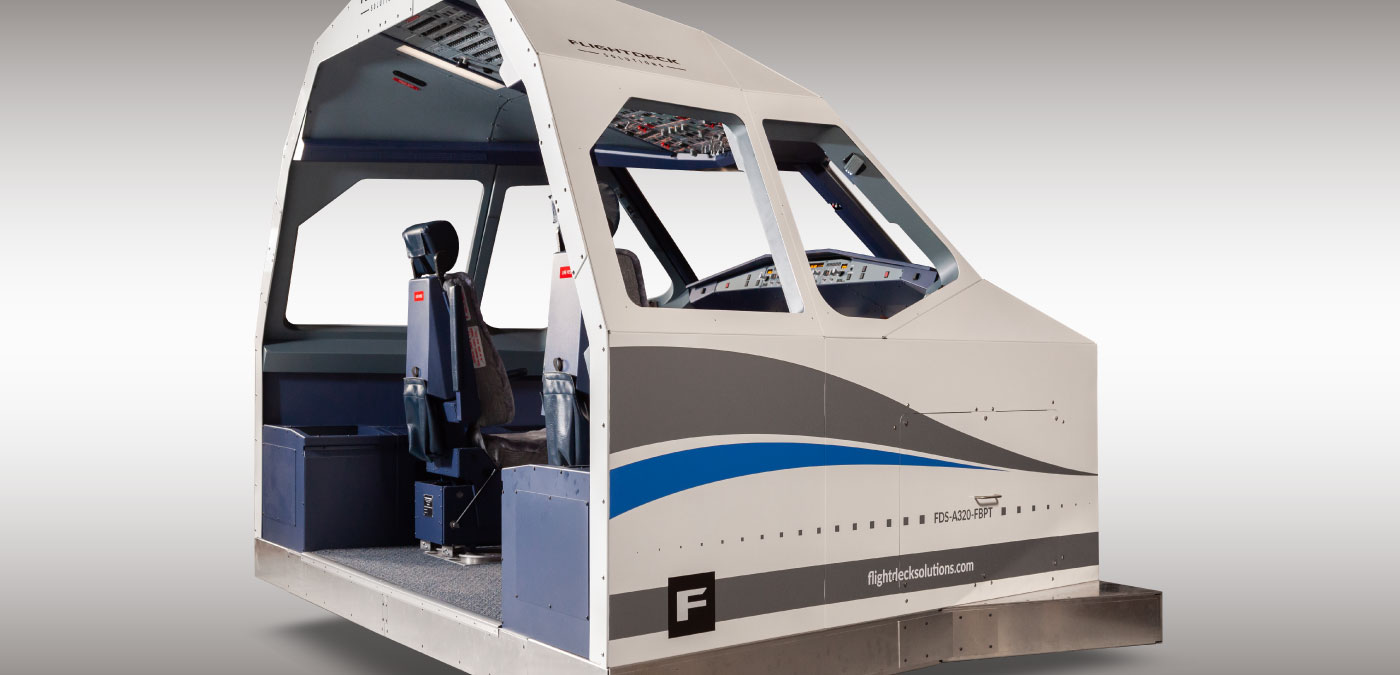
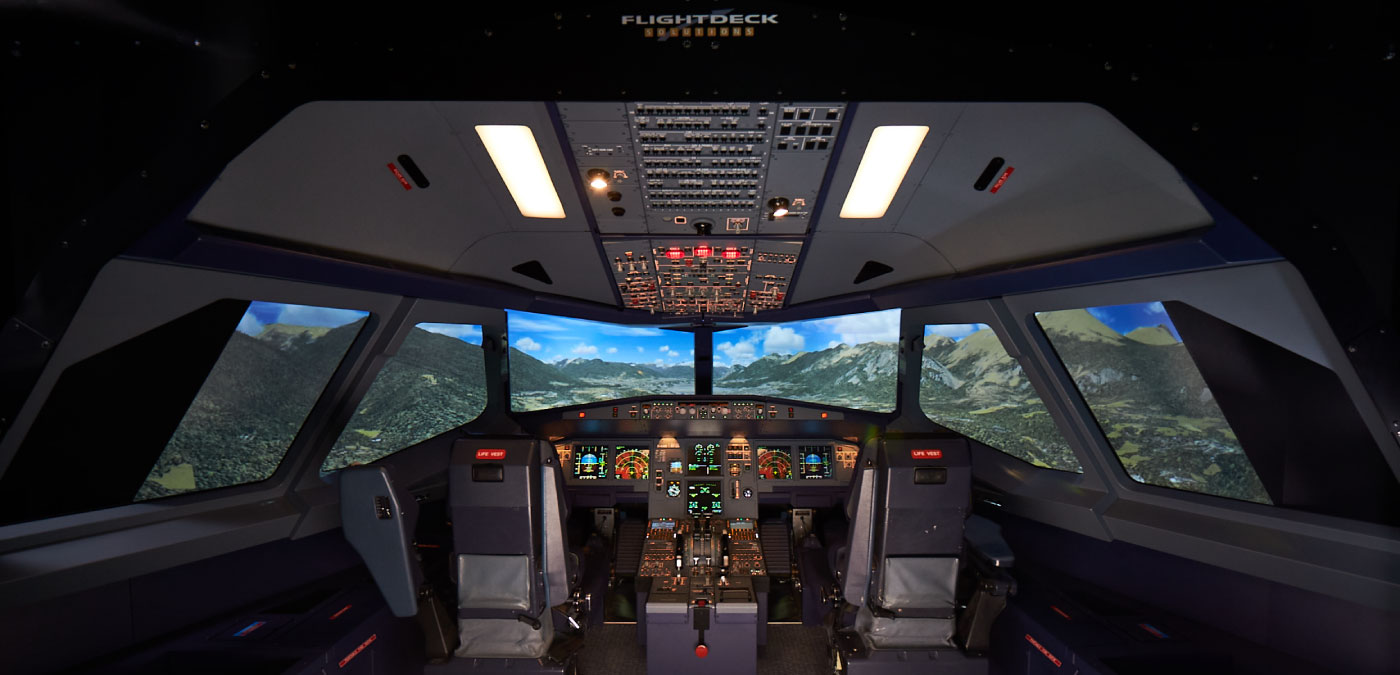
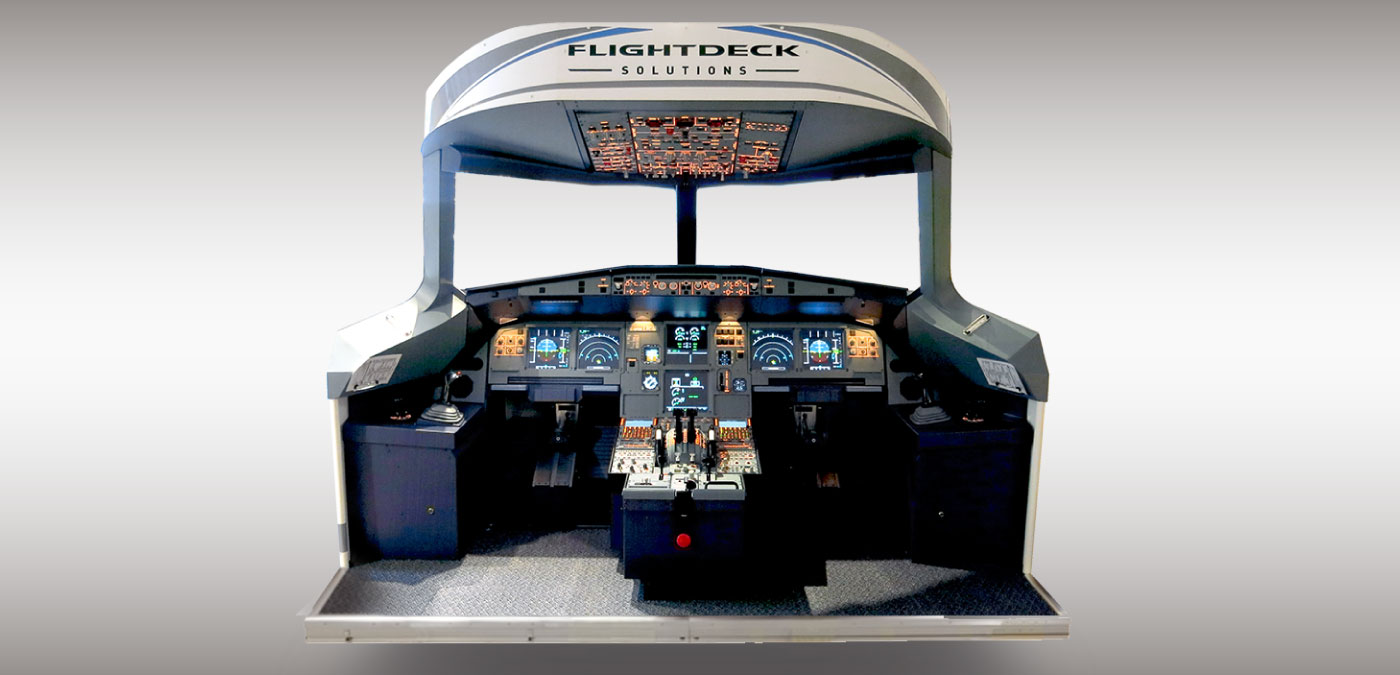
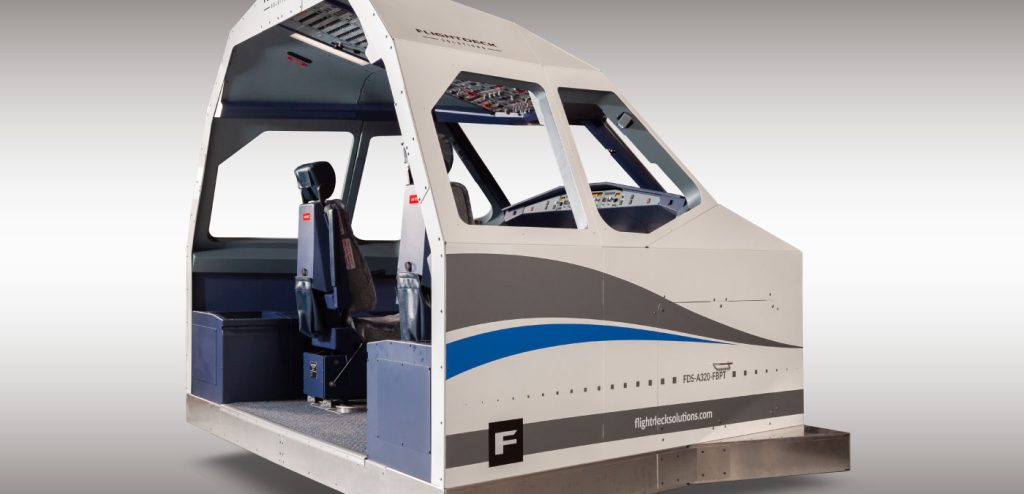
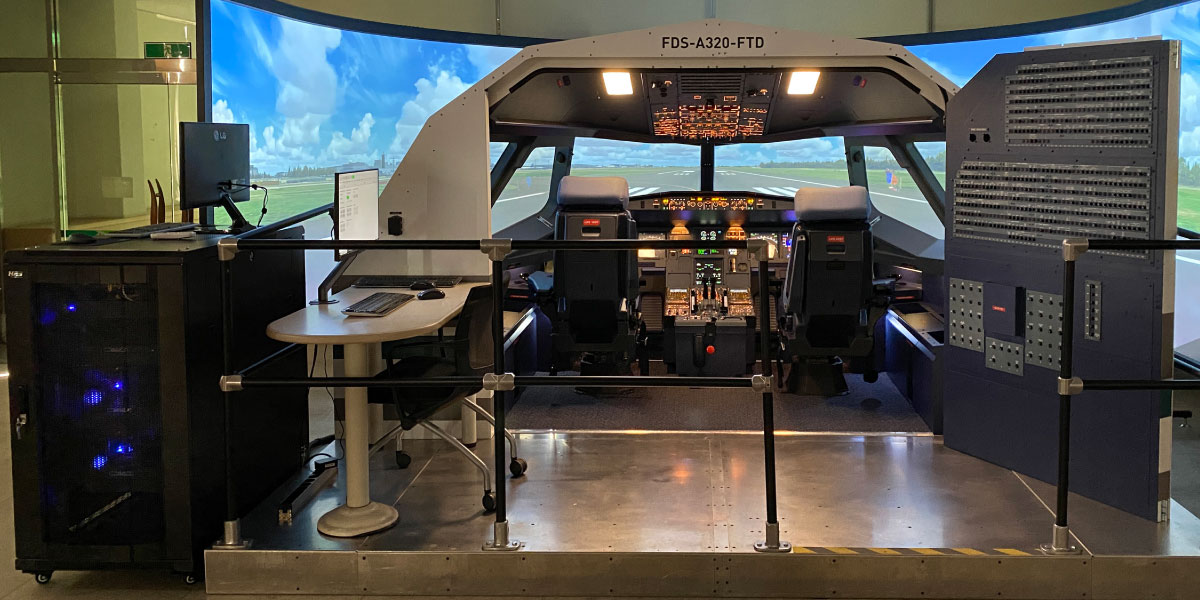
The FDS A320 is a fixed-base flight training device for professional pilot training. It is certified to FAA Level 4, EASA FNPT II MCC and KOCA Level 4 in service, built to FAA AATD and Transport Canada Level 2/MCC requirements, and reproduces the A320 flight deck with full tactile controls, dual MCDU, and complete fly-by-wire modelling with protection laws and degraded modes.

Training organizations use the device for jet orientation, multi-crew cooperation, systems and automation training, and type-transition preparation, giving crews hands-on experience with the aircraft they will fly.

Built for Professional Pilot Training

Five Regulatory Standards

Certified to FAA Level 4, EASA FNPT II MCC and KOCA Level 4 in service, and built to FAA AATD and Transport Canada Level 2/MCC requirements. Certification is available where your program requires it.

Full Tactile Flight Deck

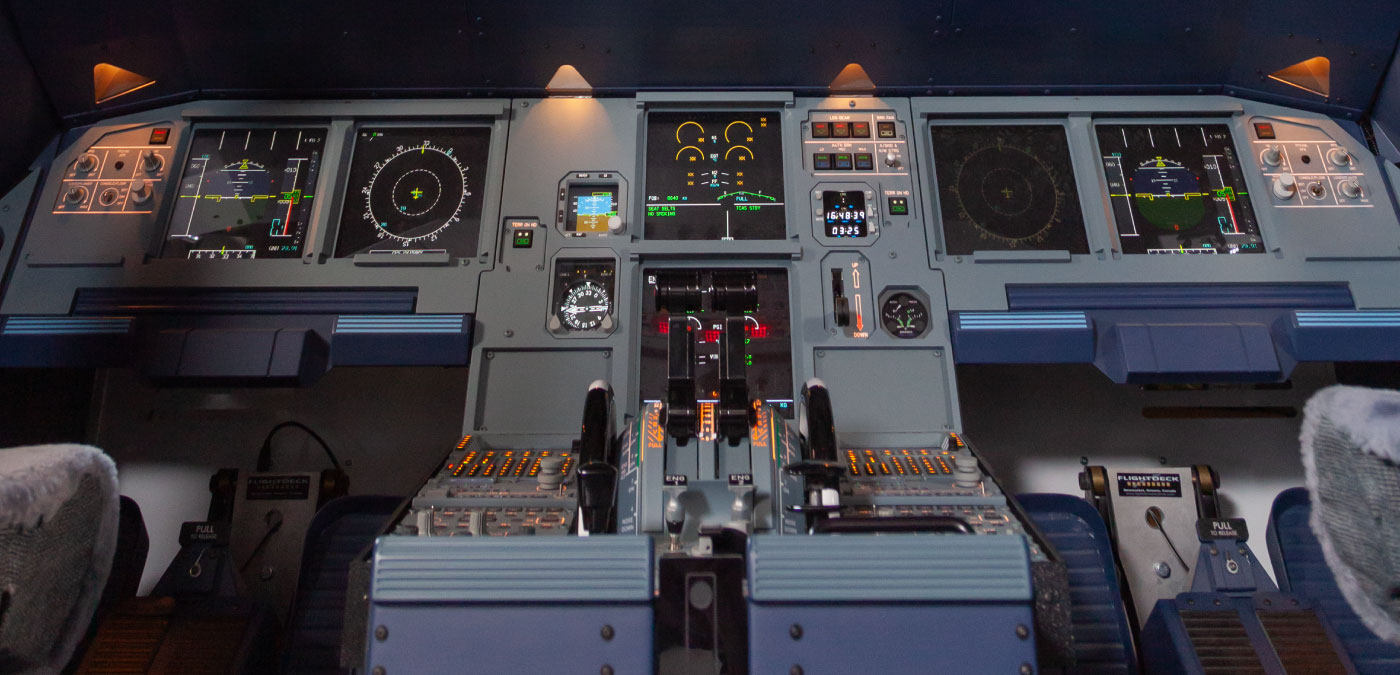
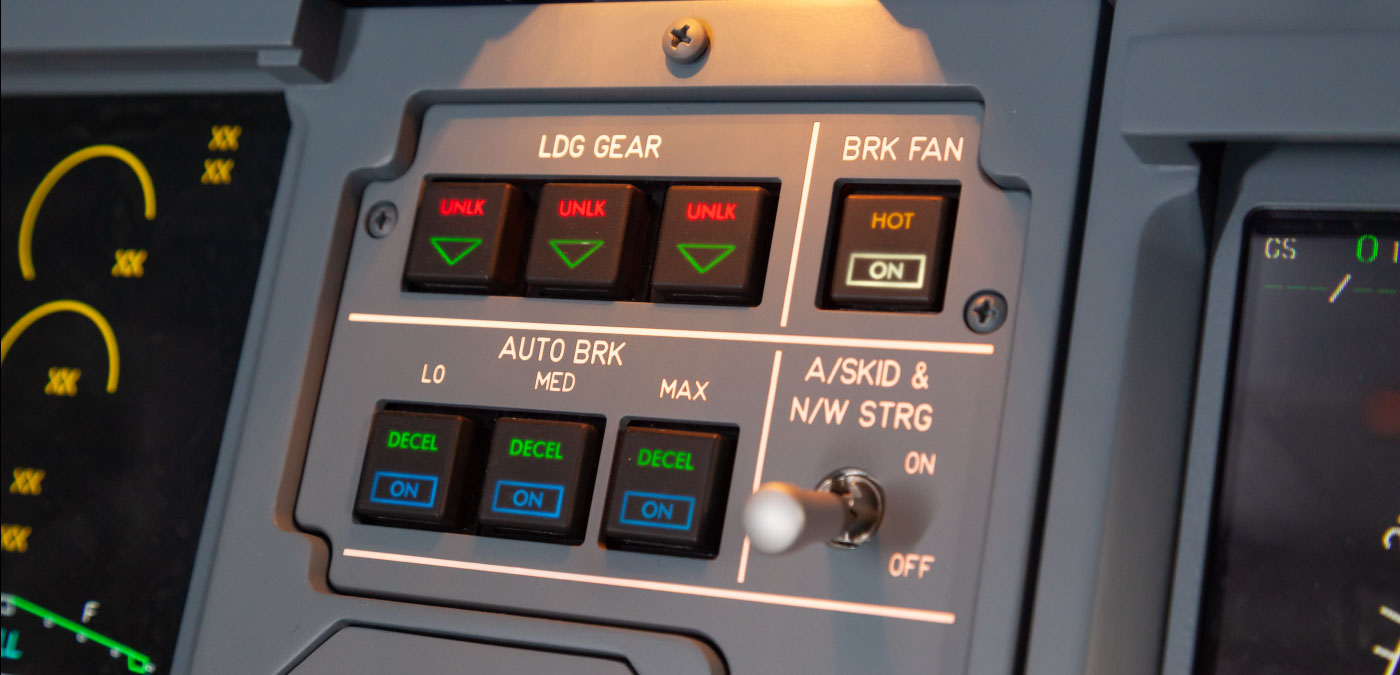
Every switch, knob, lever, and sidestick is real hardware in its correct position. No touchscreens standing in for controls that exist in the aircraft.

300+ Malfunctions

Practise the failures you can’t safely practise in the aircraft. Over 300 scenarios across engine, hydraulic, electrical, and flight control systems.

Fly-By-Wire Modelling

Complete protection laws and degraded modes, with dual MCDU programming and authentic navigation procedures.

210° Visual System

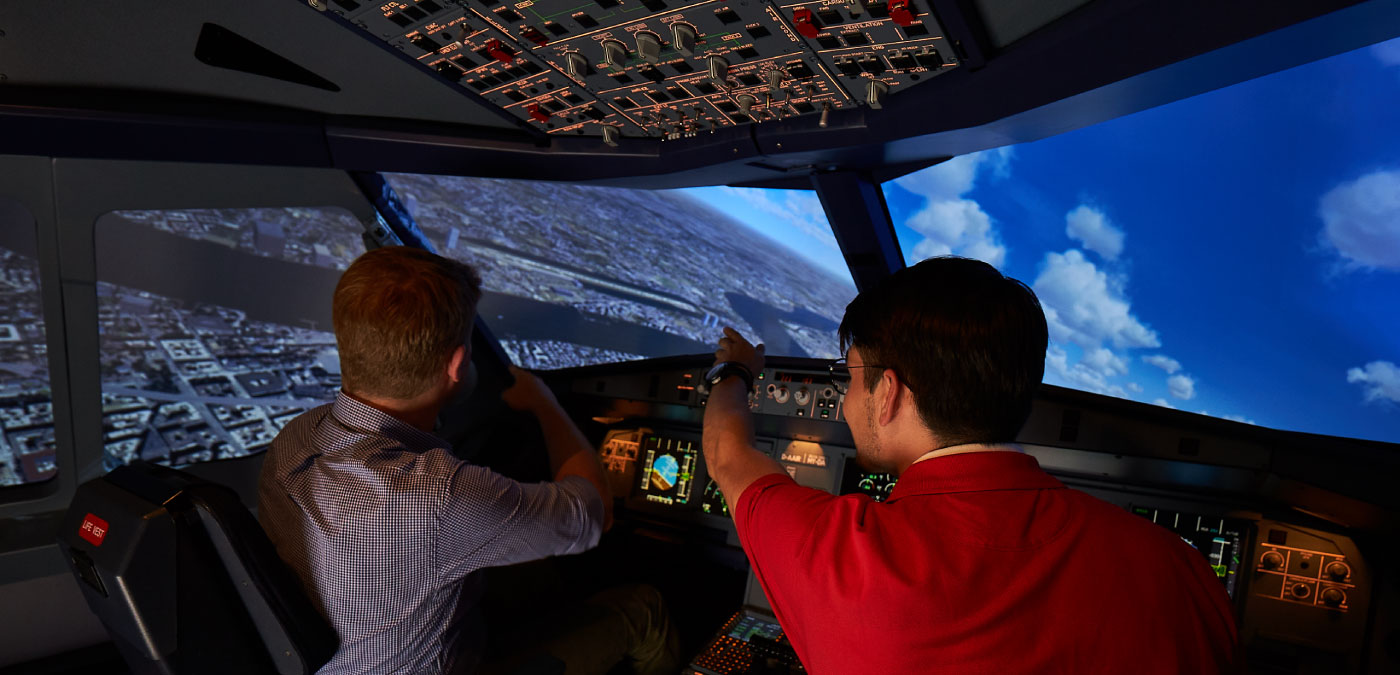
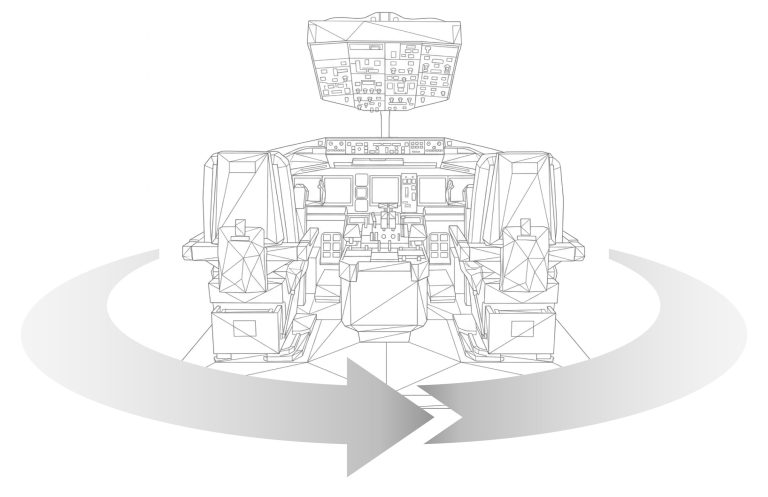
210° of wrap-around visual, so crews pick up drift, sink rate, and runway alignment the way they will in the aircraft, not by reading a panel.

Fits Your Facility

Ships through a standard door and installs in rooms you already have. No building modifications.

Explore The Flight Deck

Overhead Panel

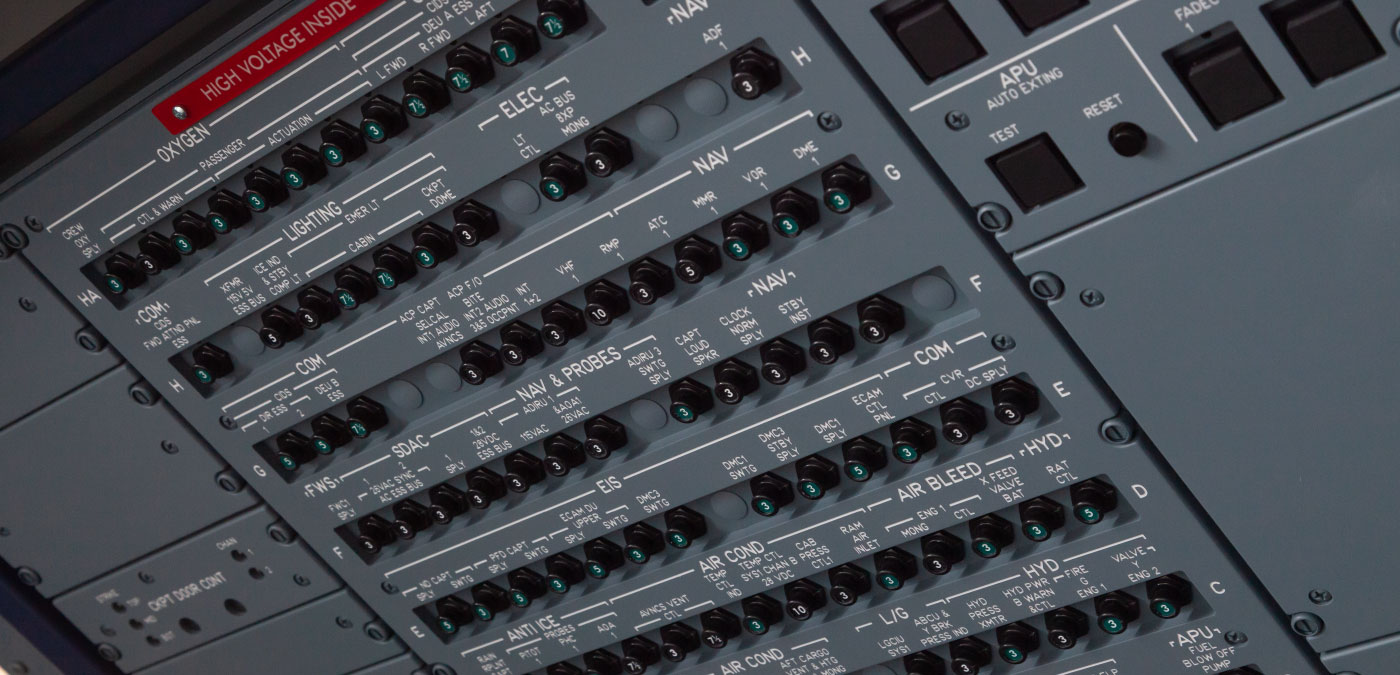
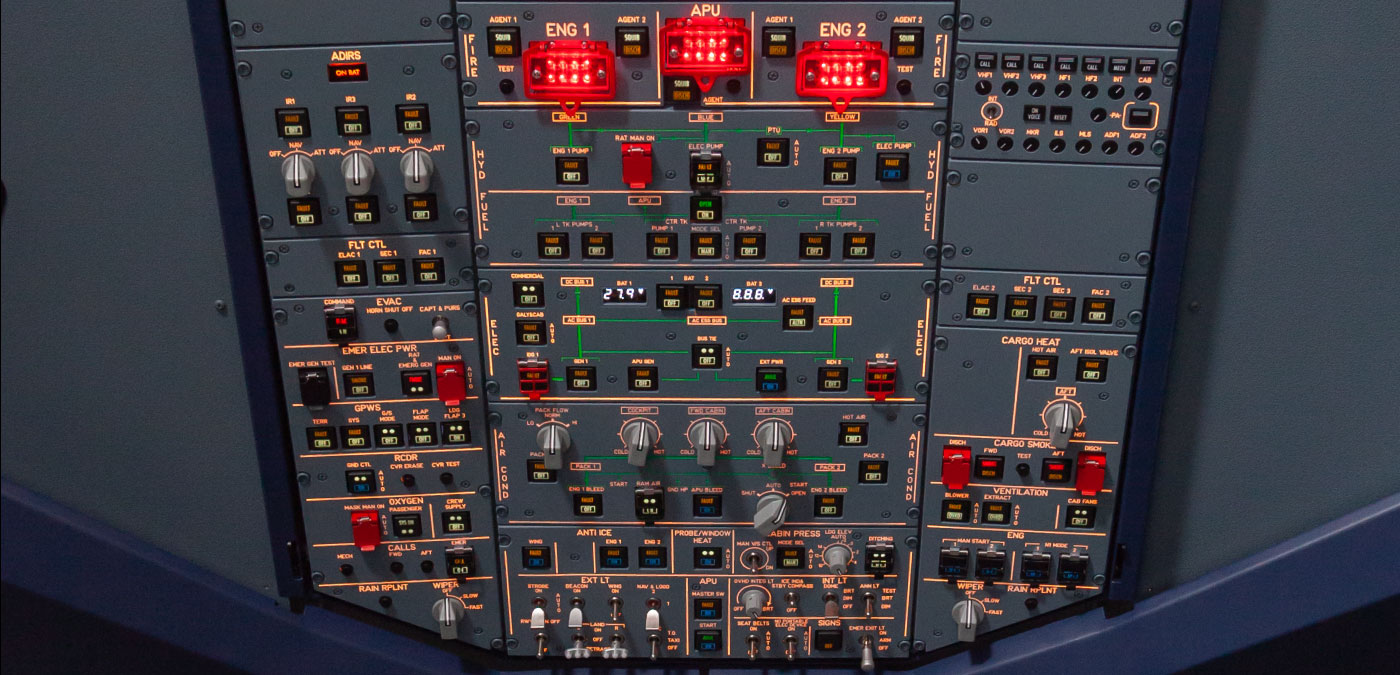
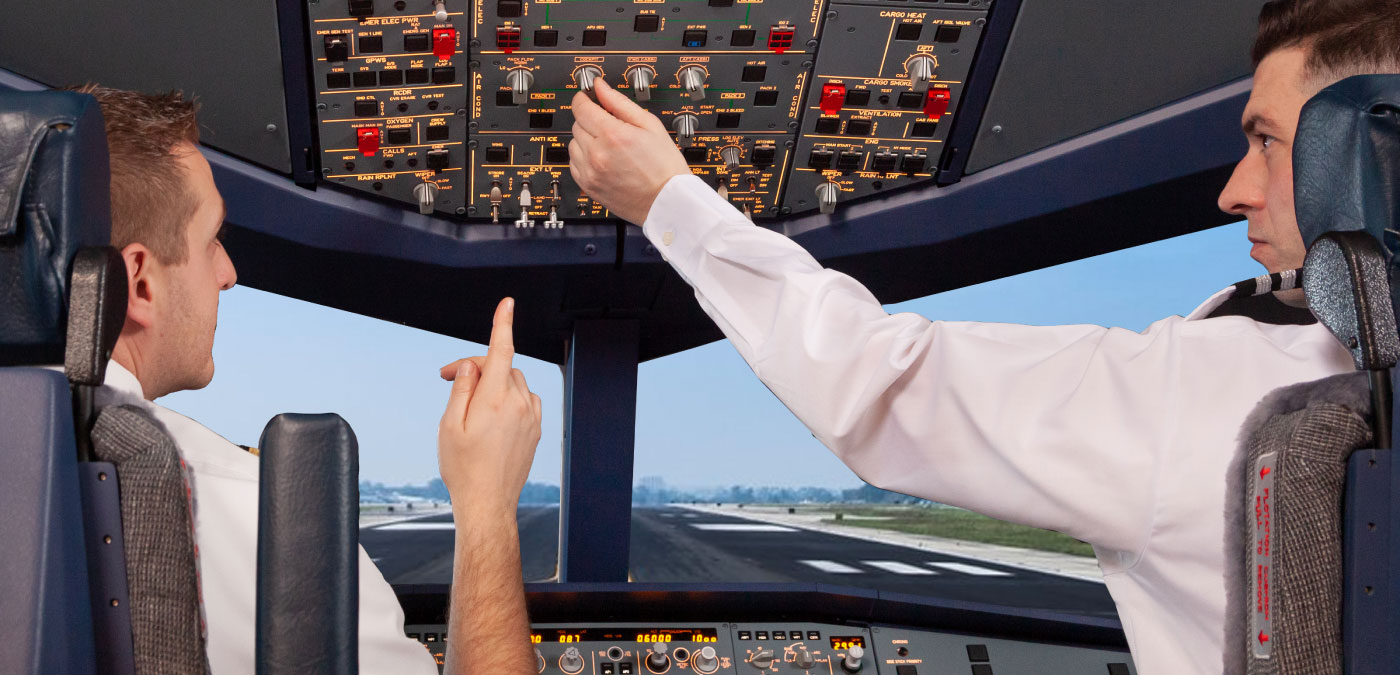
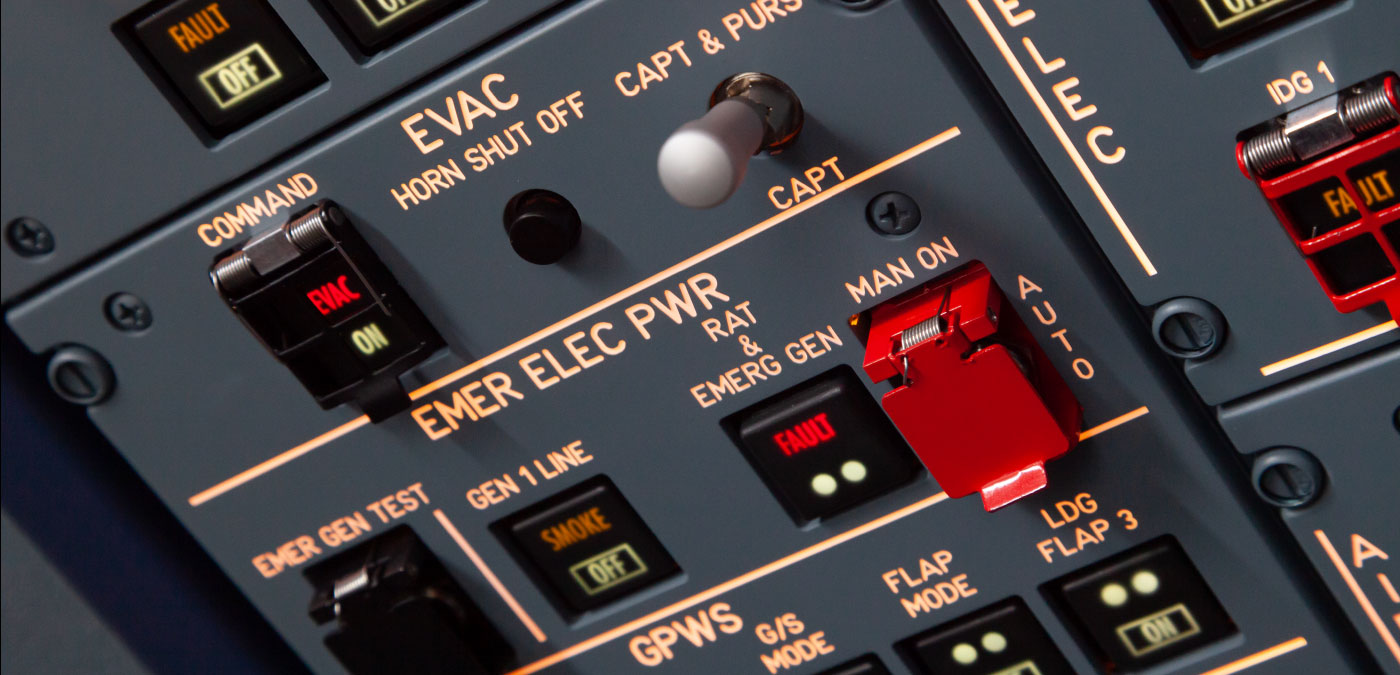
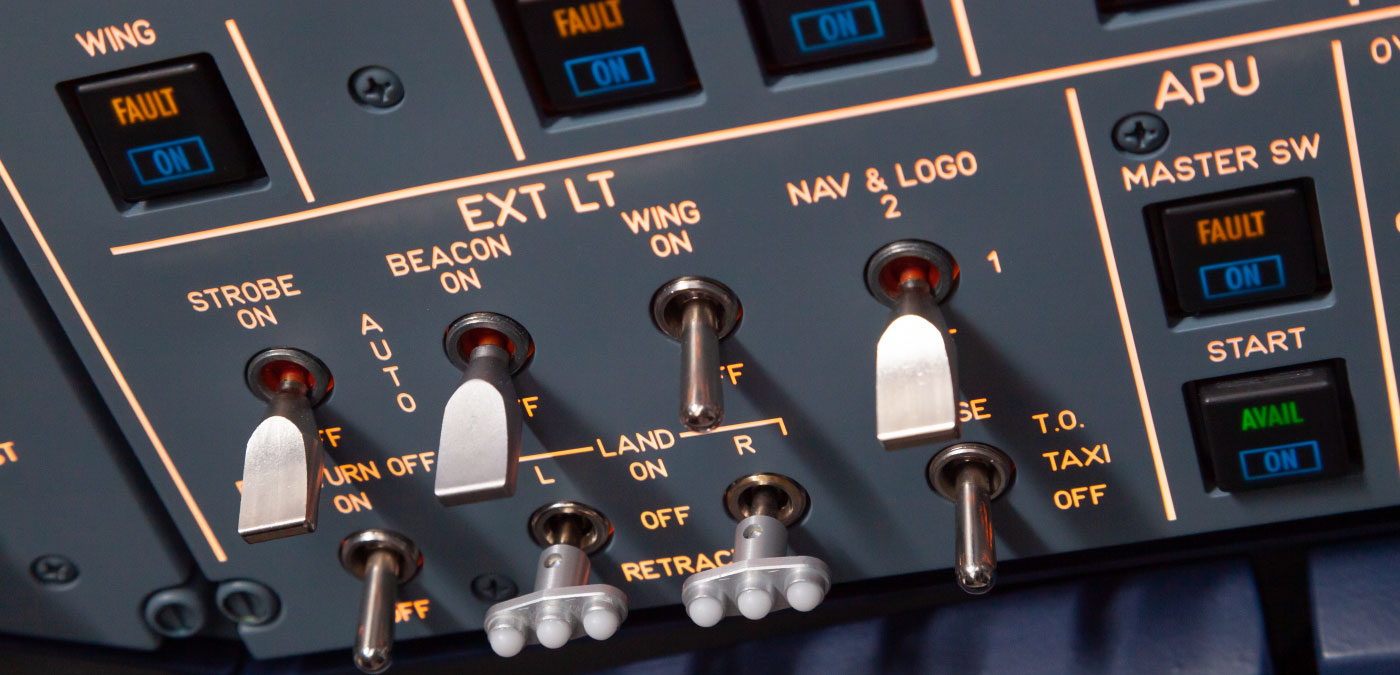
Complete overhead panel with authentic switches for electrical, hydraulic, pressurization, and engine start systems.

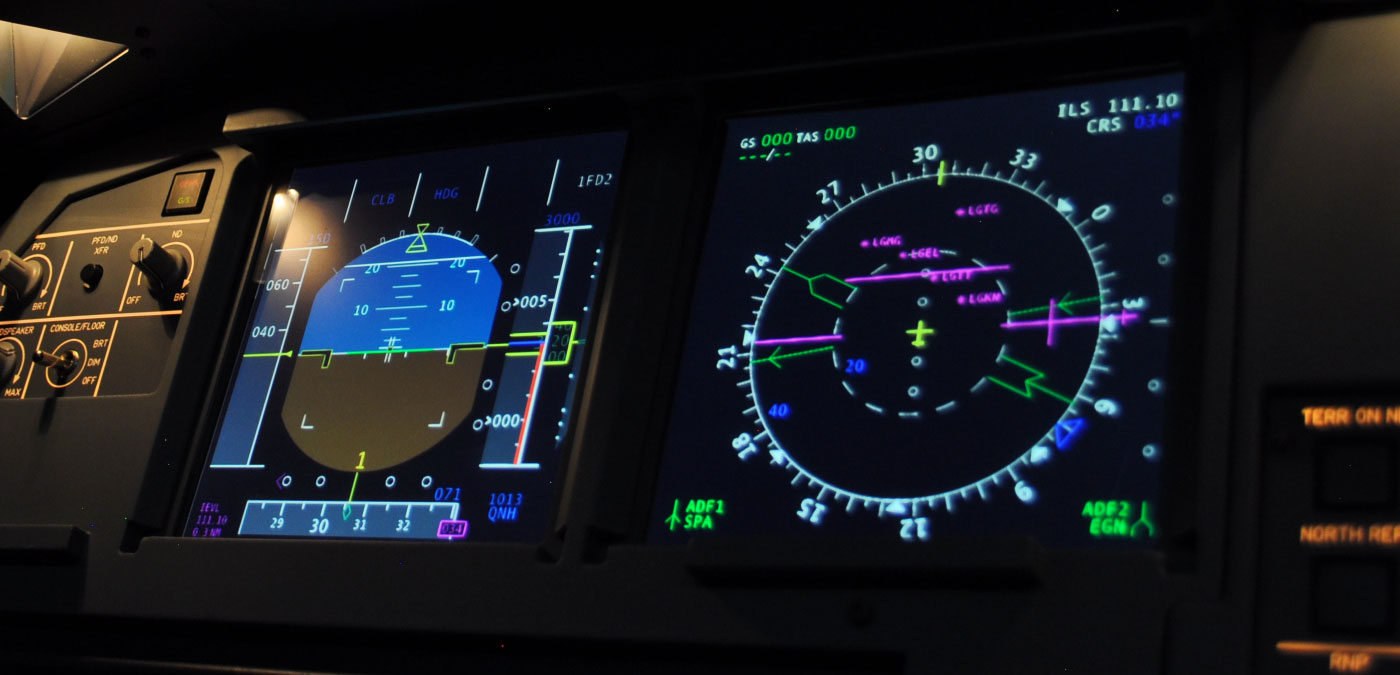
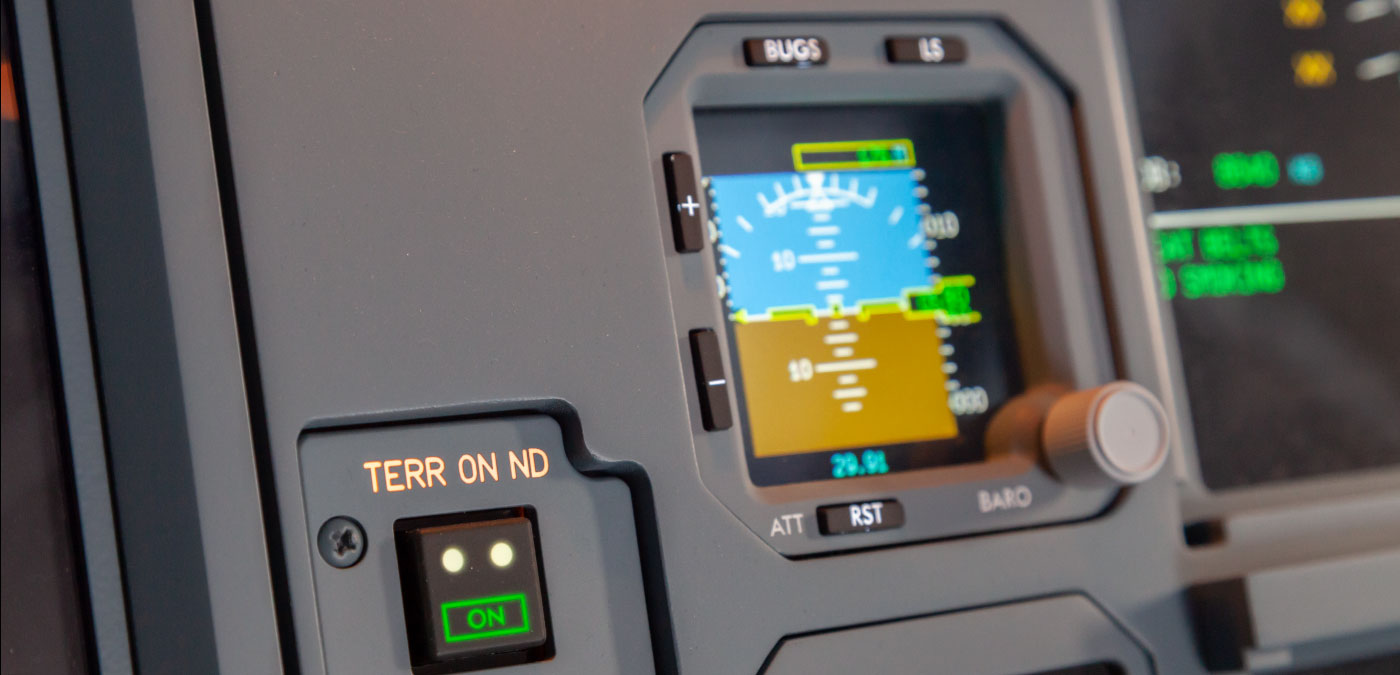
Primary Flight Display (PFD)

Attitude, speed, altitude, and flight mode annunciations on the captain's and first officer's outboard displays.

Navigation Display (ND)

Attitude, speed, altitude, and flight mode annunciations on the captain's and first officer's outboard displays.

ECAM (Electronic Centralized Aircraft Monitoring)

Engine and warning display above, system and status display below. Crews work non-normal procedures the way the aircraft presents them.

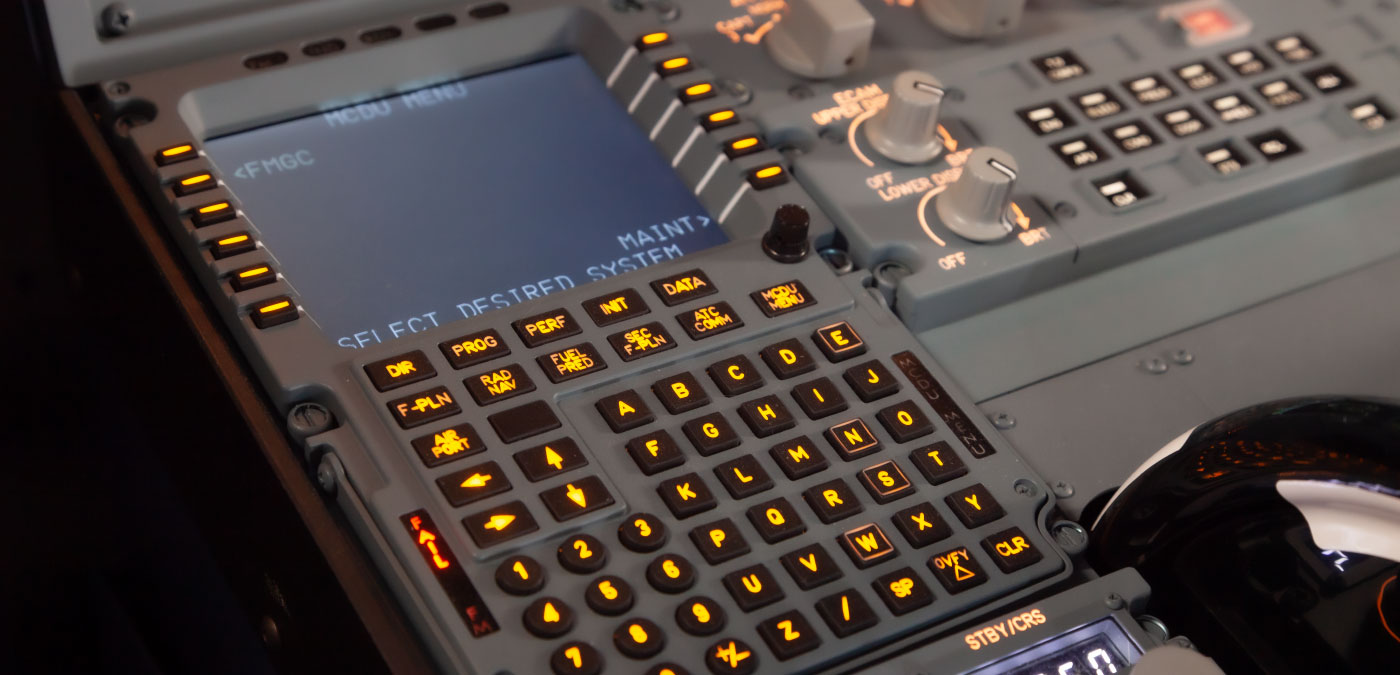
MCDU/FMS

Flight plan entry, performance data, and navigation programming. Dual units, one per pilot position.

Flight Control Unit (FCU)

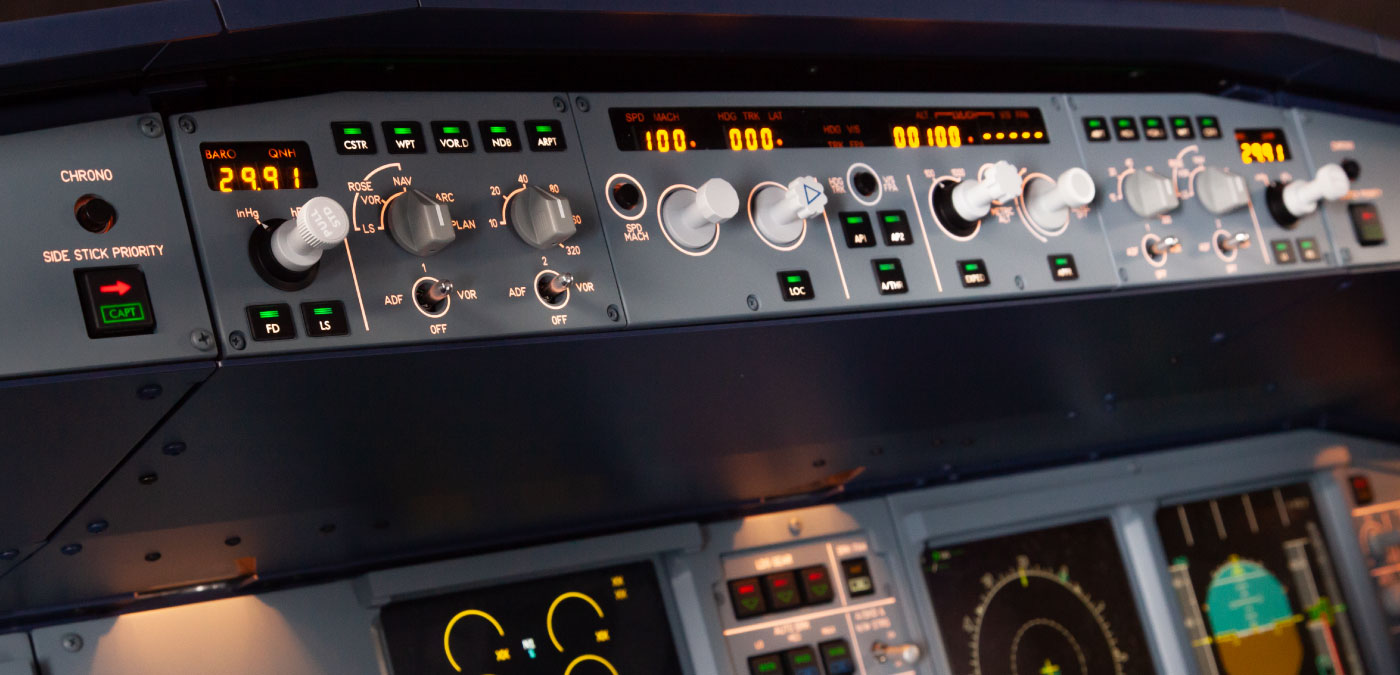
Where the crew sets heading, altitude, speed, and vertical speed. Push and pull logic hands targets between selected and managed modes.

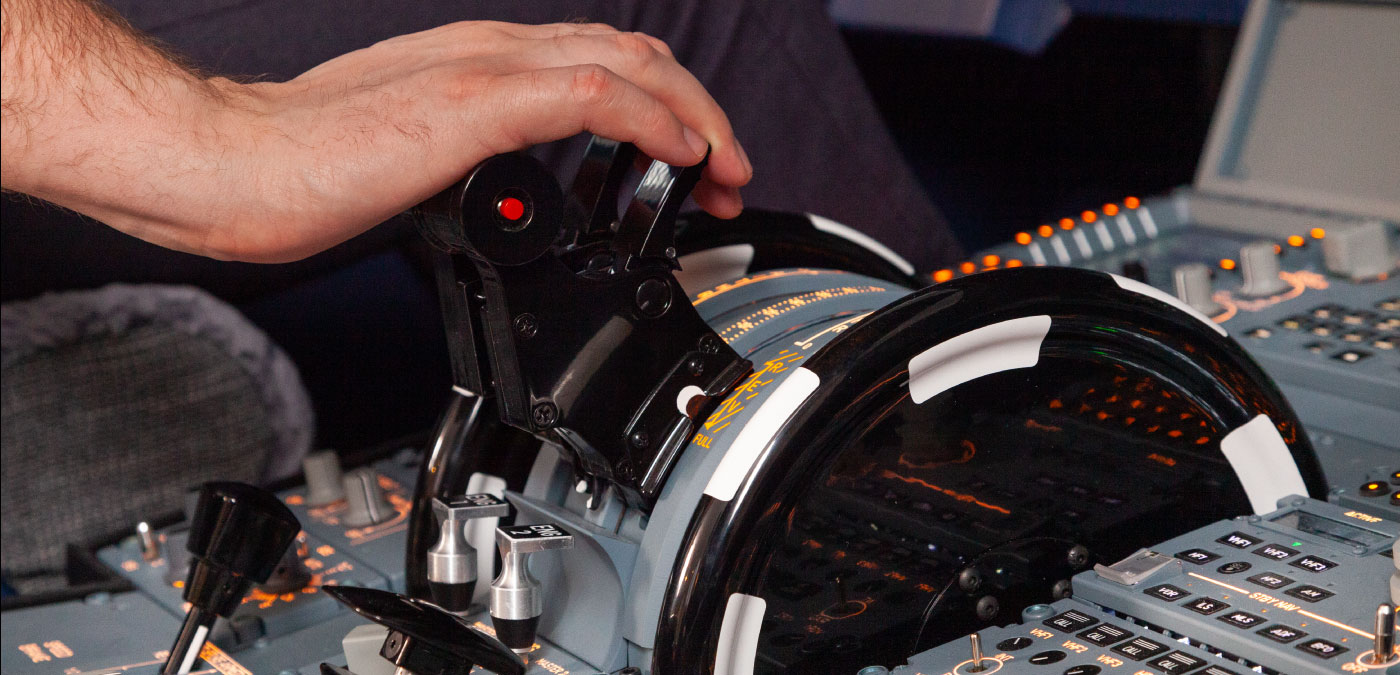
Thrust Levers

Detented thrust levers with the A320's fixed positions rather than a continuously moving quadrant.

Visual Display System

High-resolution out-the-window visual for airport environments, weather, and time of day. Available in 210° wrap-around or flat-panel configuration to suit your room.

Sidesticks

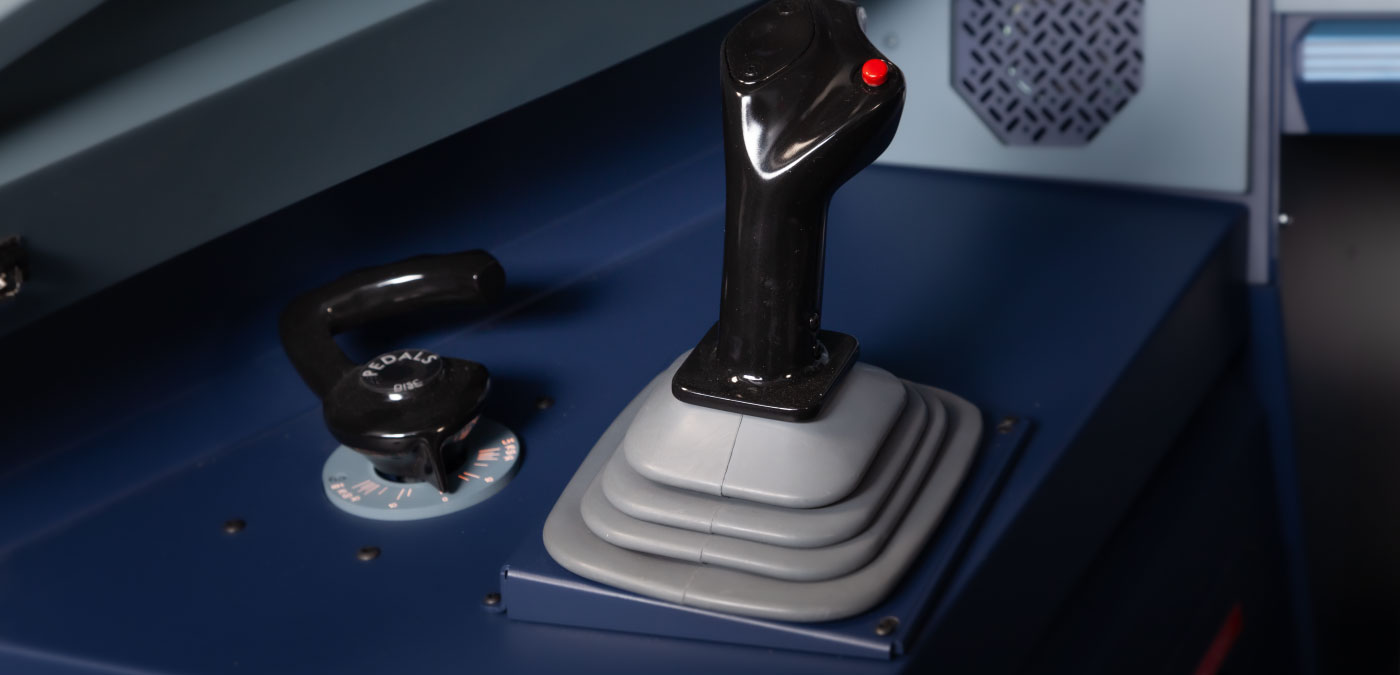
Outboard of each seat, as in the aircraft. Crews build the habit of flying with the hand the A320 asks for.


Crew Seats

Purpose-built for training devices rather than adapted from aircraft or generic seating. Servo-driven height adjustment on J-rails with manual fore and aft travel, and stow-away armrests that open up instructor access during a session. Rated to 400 lb and built for years of continuous use.

Pedestal

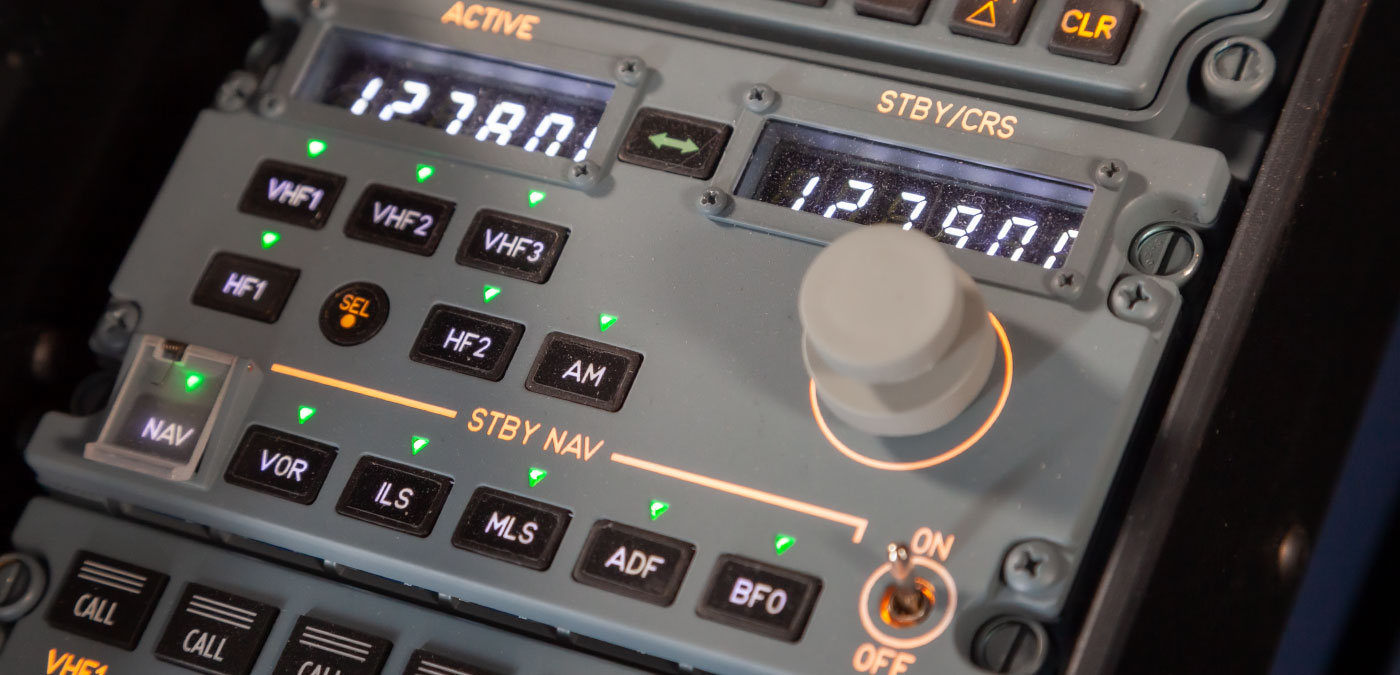
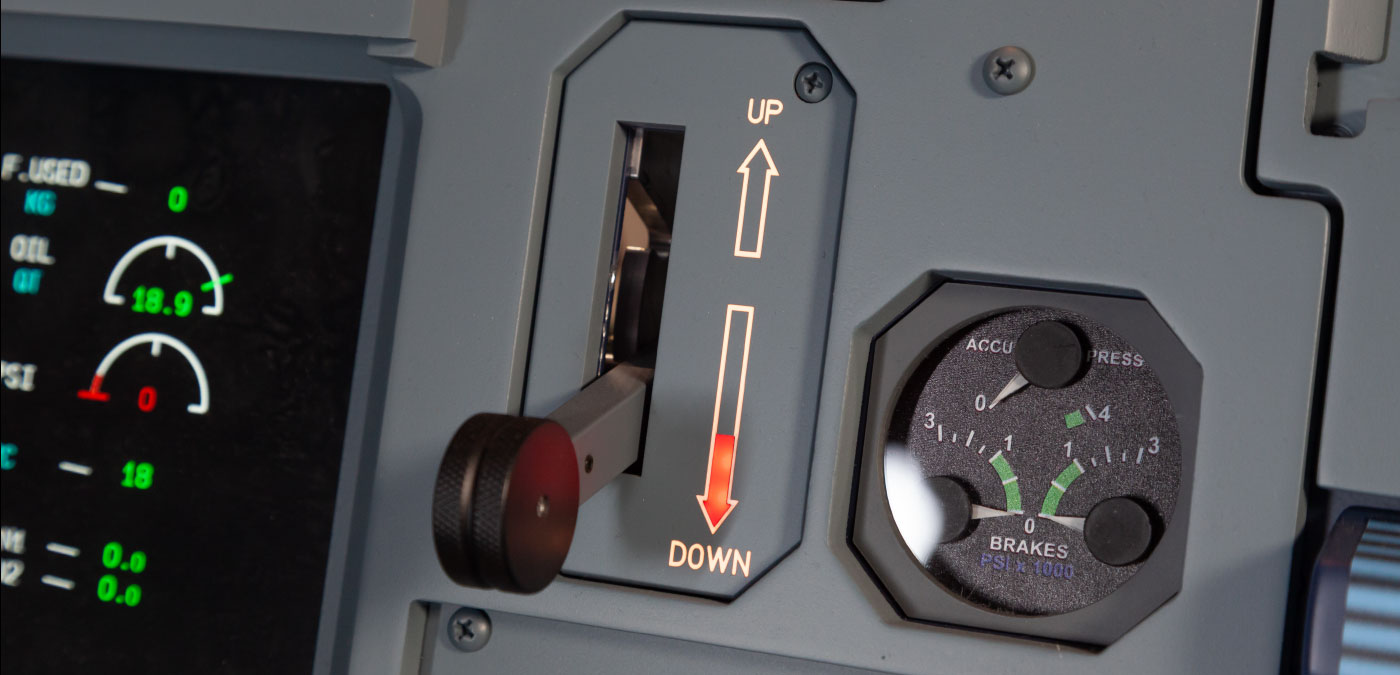
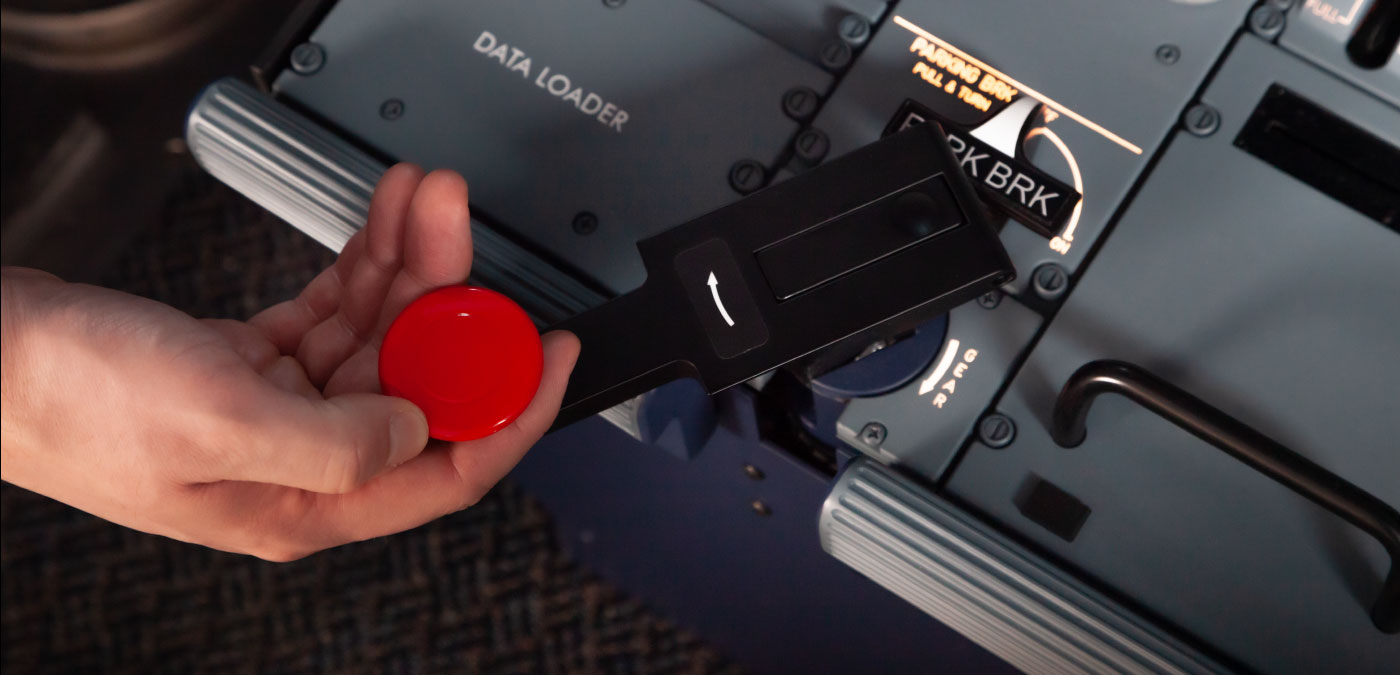
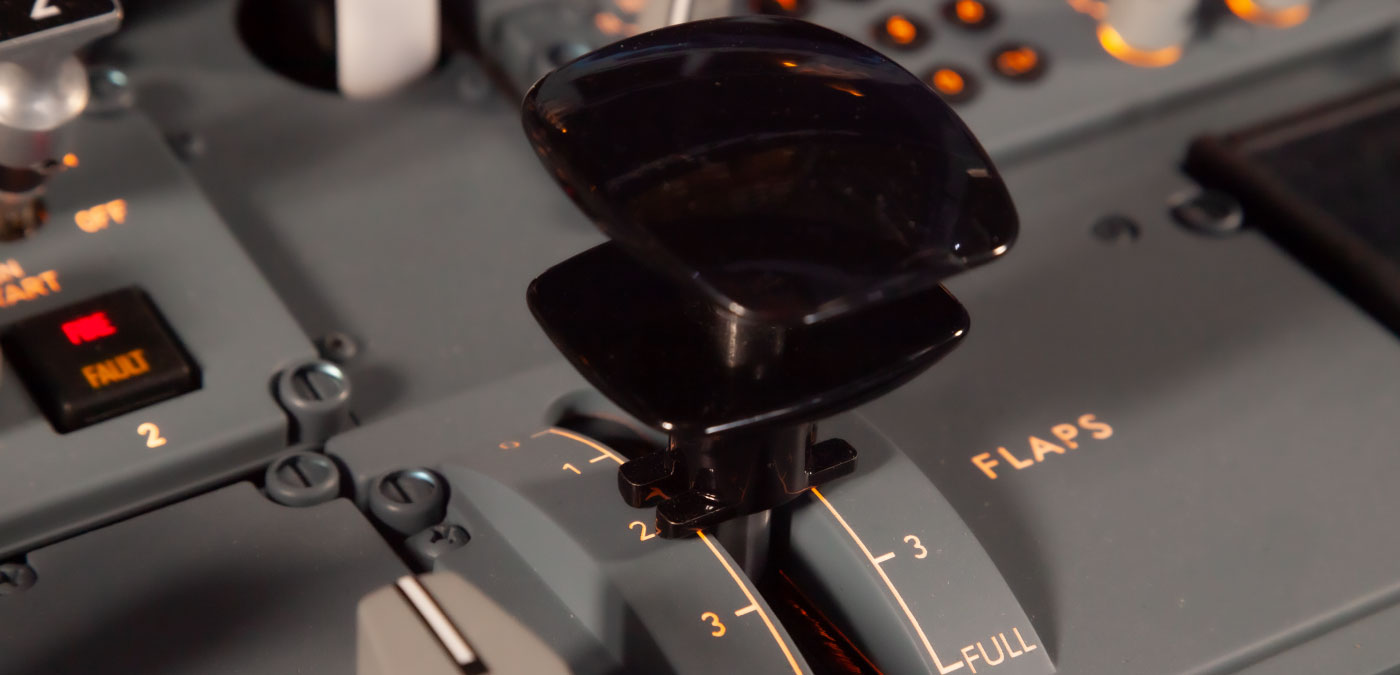
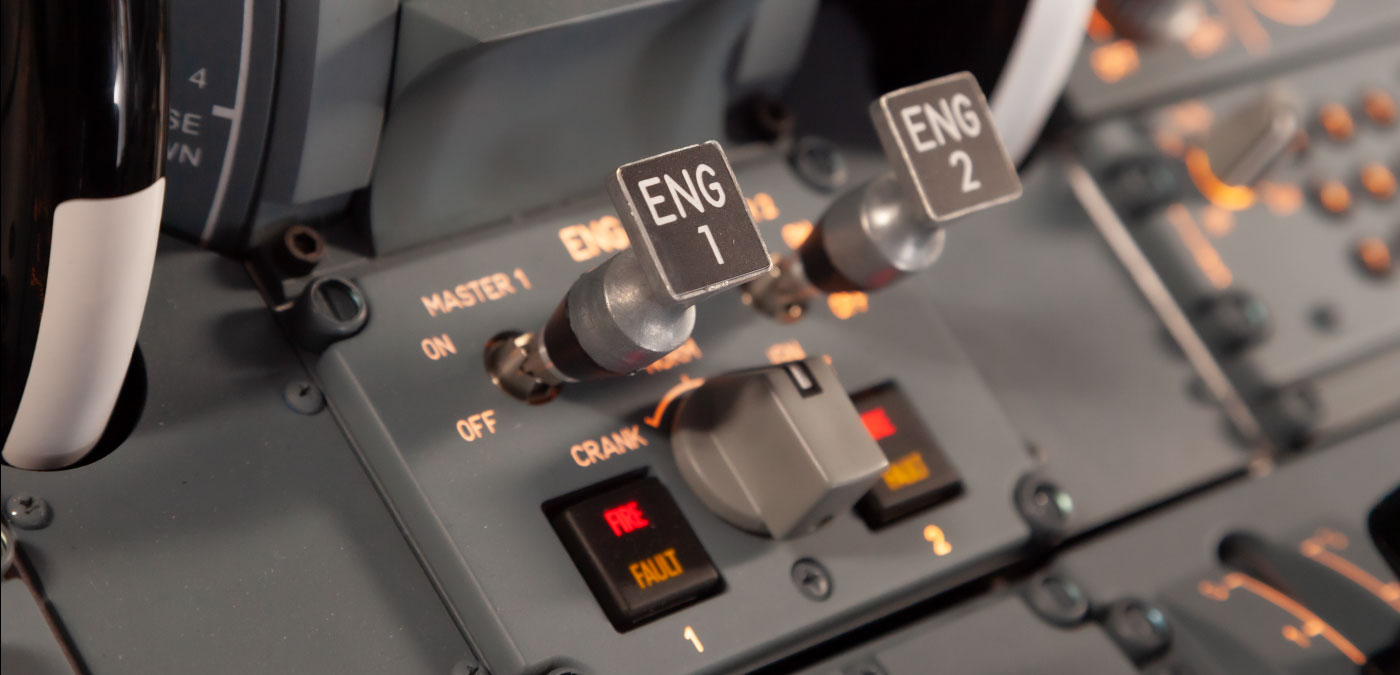
Speed brake, flap lever, engine controls, radios, and the parking brake, in their correct positions.

Rudder Pedals

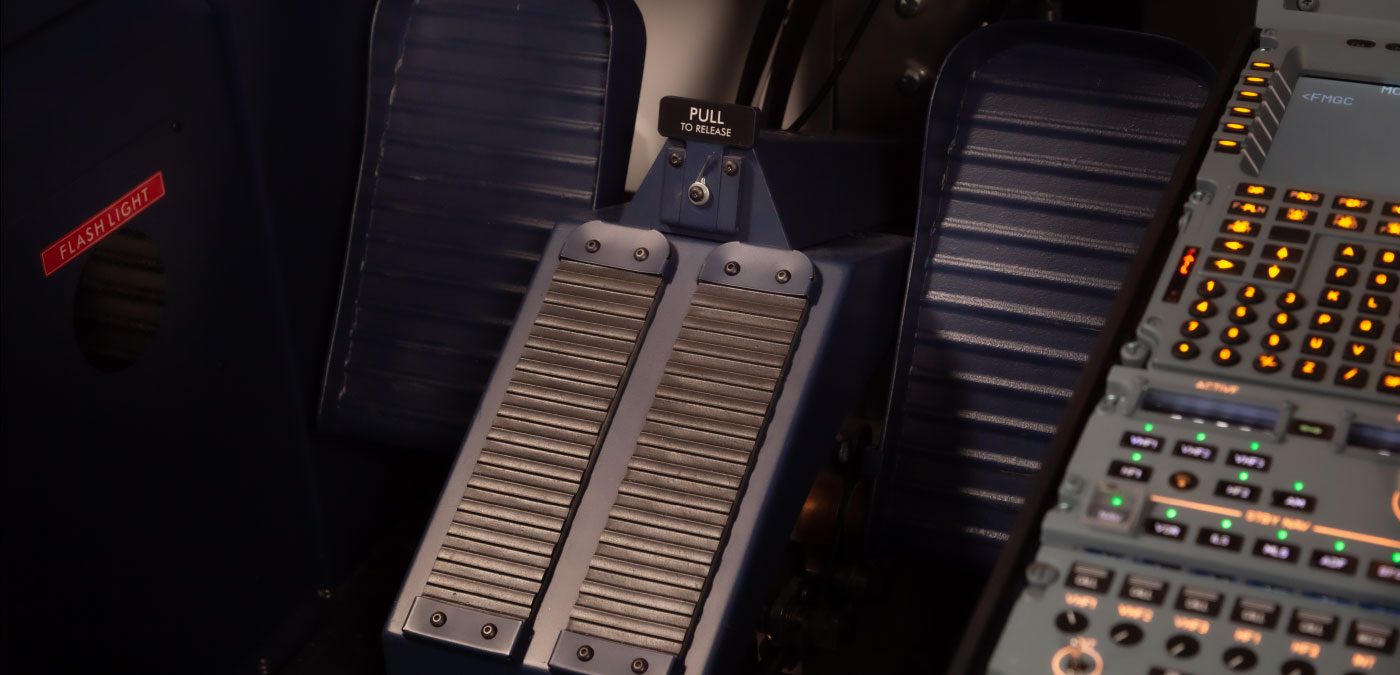
Adjustable pedals with braking and nosewheel steering. Control loading available, so pedal forces build and release the way they do in the aircraft.
Muscle memory that transfers to the aircraft

Detented thrust levers and outboard sidesticks deliver authentic tactile feedback, so procedures learned here carry directly into the flight deck.

A flight deck pilots recognize instantly

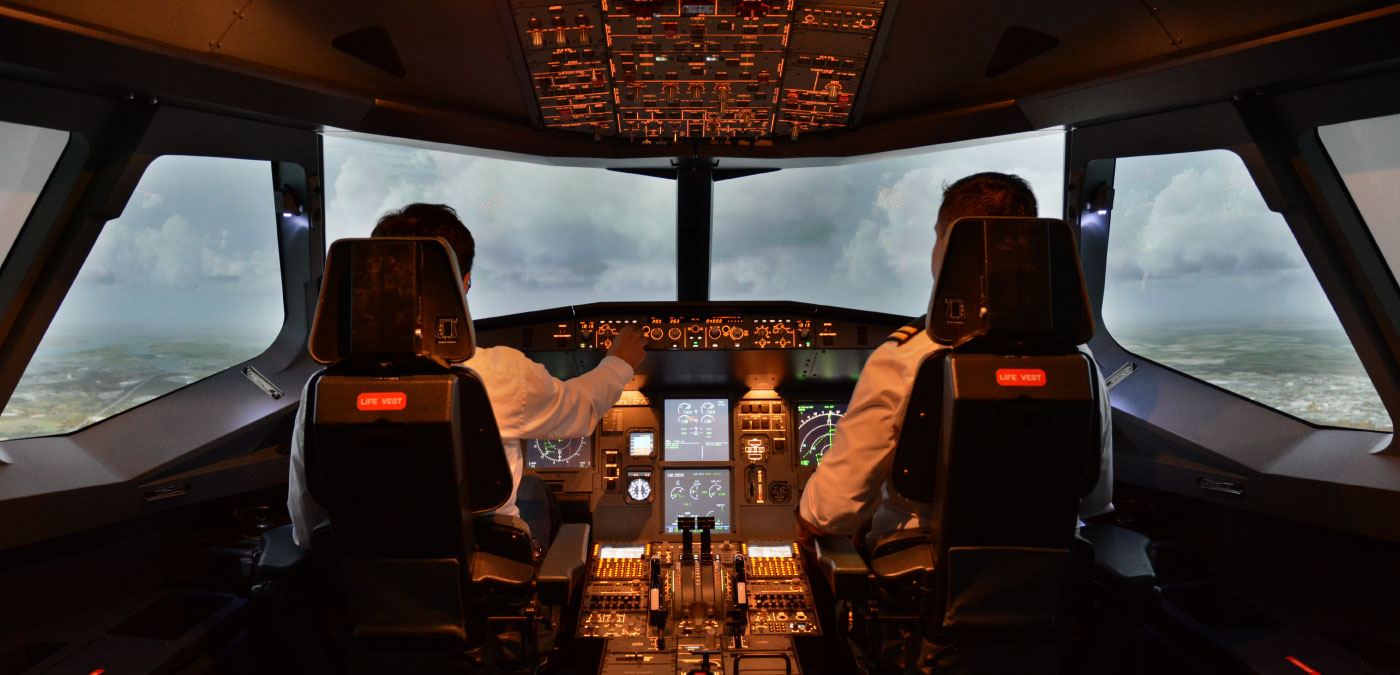
Authentic backlit instrument panels reproduce the A320 flight deck layout, so training happens in a genuinely familiar environment.

Training you control, scenario by scenario

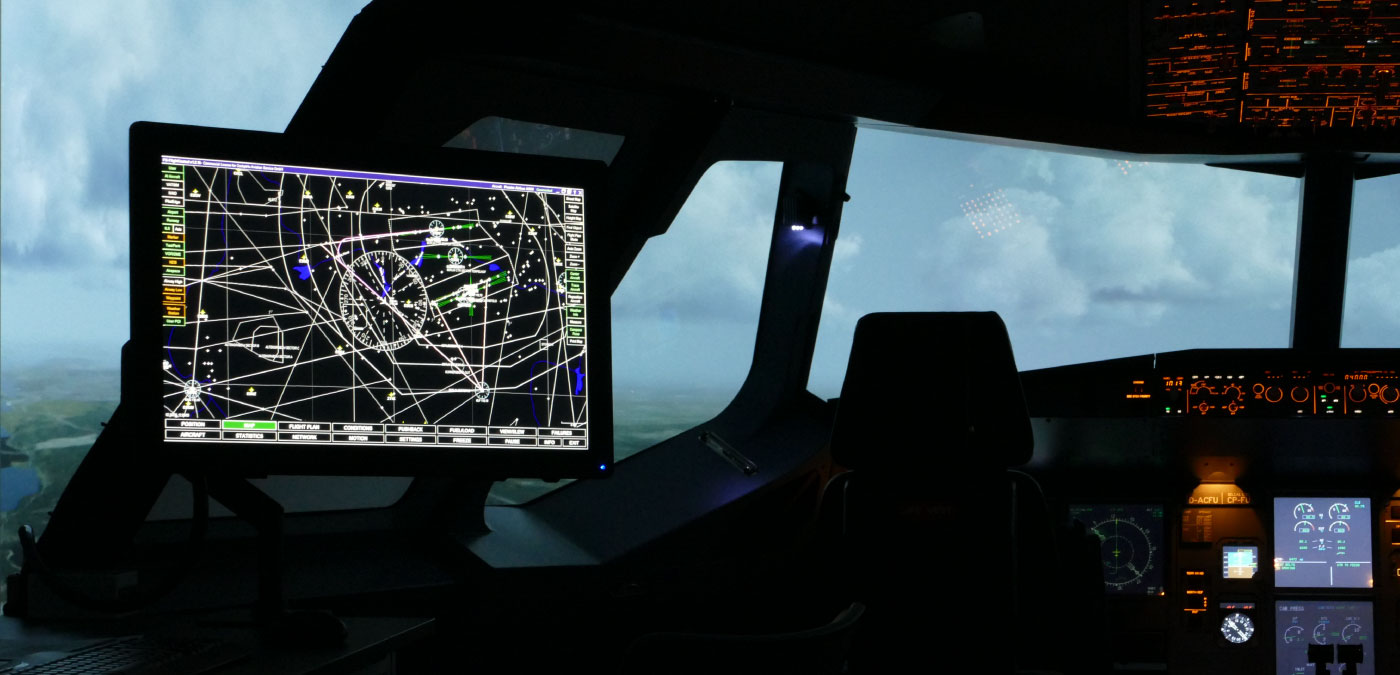
The Instructor Operating Station lets instructors inject failures, control weather, and reposition the aircraft, turning every session into targeted, repeatable practice.

Technical Specifications

Training Capabilities

Systems
Training

Operational Training

Facility & Installation

Certifications & Compliance

Training Applications

Jet Orientation Course (JOC)

Introduce pilots to jet aircraft operations, high-altitude handling, and swept-wing performance in an authentic A320 flight deck before they reach an airline.

Multi-Crew Cooperation (MCC)

Build the CRM, communication, and collaborative decision-making skills of a two-pilot crew in a realistic airline operating environment.

Systems & Automation Training

Develop proficiency in complex automation, dual MCDU operations, and systems management across 13 aircraft systems.

Type-Transition & Interview Preparation

Prepare pilots for airline assessments and type training, including the sidestick handling and managed-mode automation that define Airbus operations, so they interview and perform with genuine understanding of the aircraft they will fly.

Procedures & Recurrent Proficiency

Practise standard operating procedures, normal and non-normal checklists, and recurrent proficiency work with consistent, repeatable lesson plans.

Scenario-Based Training

Use the Instructor Operating Station to inject failures, control weather, reposition the aircraft, and record flight analysis for tailored scenario training.

Explore solutions for:

Certification & Compliance

The FDS A320 is built to regulatory standards, and FDS installations have earned certification from the authorities below. Certified means a regulator has assessed this device and granted approval. Compliant means the device is built to that standard, and certification can be pursued where a program requires it. Regulators certify each installation individually, and FDS supports customers through the process.

FAA Level 4
Certified

The FAA qualifies flight training devices by level under 14 CFR Part 60. An FDS A320 installation has been qualified at Level 4. What this permits within a given program is set by FAA standards and the training provider’s approved course.

EASA FNPT II MCC
Certified

EASA defines the Flight and Navigation Procedures Trainer II with Multi-Crew Cooperation for procedural and multi-crew training. An FDS A320 installation has been qualified to this standard by the national aviation authority in its country of operation.

KOCA Level 4
Certified

Certification issued by the Korea Office of Civil Aviation, the civil aviation authority operating under the Korea Ministry of Land, Infrastructure and Transport, recognizing the device to Level 4 under Korean FSTD standards.

FAA AATD
Compliant

The FAA’s approval category for advanced aviation training devices. Under FAA regulations, an approved AATD may be used for defined training and experience credit when operated within an FAA-approved training program.

Transport Canada
Level 2/MCC
Compliant

Transport Canada’s certification level for the device, including approval for Multi-Crew Cooperation training.

What this permits within a given program is set by Transport Canada standards and the training provider’s approval.

What this means for your program

What any of these standards mean for your program's training credit depends on your regulator and your approved course. We can walk through your situation in a consultation.

In service

The FDS A320 is in service with professional training organizations in Canada, the United States, and throughout Europe and Asia.

Auburn University

Auburn, Alabama, USA

Auburn University’s School of Aviation operates the FDS A320 in its professional flight program. The school is a Delta Propel partner.

“The quality and functionality of our FDS A320 FBPT is outstanding. Many Auburn graduates who are A320 captains currently flying for several major US airlines have all been impressed with our FDS FBPT.”
—
Carl Thompson, Airline Captain/Instructor (Retired), Department of Aviation, Auburn University

Sinclair College

Dayton, Ohio, USA

Sinclair College’s Aviation Technology program operates the FDS A320.

FAQs

Does training on the FDS A320 count toward a licence or rating?

That depends on your regulator and your approved training program, not on the device alone. The A320 is certified to FAA Level 4, EASA FNPT II MCC and KOCA Level 4 in service, and built to FAA AATD and Transport Canada Level 2/MCC requirements. How a device translates into training credit is determined by your civil aviation authority and the course you have approved, and where a program requires formal certification or qualification, FDS supports the process. We can walk through your situation in a consultation.

Certified means a regulator has assessed this device and granted approval. Compliant means the device is built to that standard, and certification can be pursued where a program requires it. The A320 is certified to FAA Level 4, EASA FNPT II MCC and KOCA Level 4 in service, and built to FAA AATD and Transport Canada Level 2/MCC requirements. FDS supports customers through certification where their program calls for it.

It handles the work that does not require motion. Procedures, checklist discipline, systems and automation management, FMS programming, and multi-crew cooperation are all trained effectively in a fixed-base device. Moving that work off the full flight simulator leaves FFS time available for the training that genuinely needs it, and gives crews somewhere to practise procedures without competing for that schedule.

Real hardware. Switches, knobs, levers, and sidesticks are physical components in their correct positions, so a pilot builds the motor memory the aircraft will ask for. Nothing on the flight deck substitutes a touchscreen for a control that exists in the aircraft.
Approximately a 10ft x 10ft footprint with a 9ft minimum ceiling. No building modifications are needed, and the device is designed for rooms that already exist rather than purpose-built simulator bays. A single or multi-flat-panel visual option is available where ceiling height or room depth will not accommodate the 210° wrap-around display.

The nose and instructor operating station ship assembled where the building entry allows, or in sections that pass through a standard door. The visual display system is assembled onsite. FDS technical services handles installation and commissioning.

Let's look at what your program needs.

Discover how FDS training devices can enhance your program efficiency, reduce costs, and meet regulatory requirements.

Schedule a 20-minute consultation

Tell us about your project. We reply to every detailed enquiry within 24 hours to find a time.

We use your details only to respond to your request unless you agreed to receive occasional updates.

Spec doc request